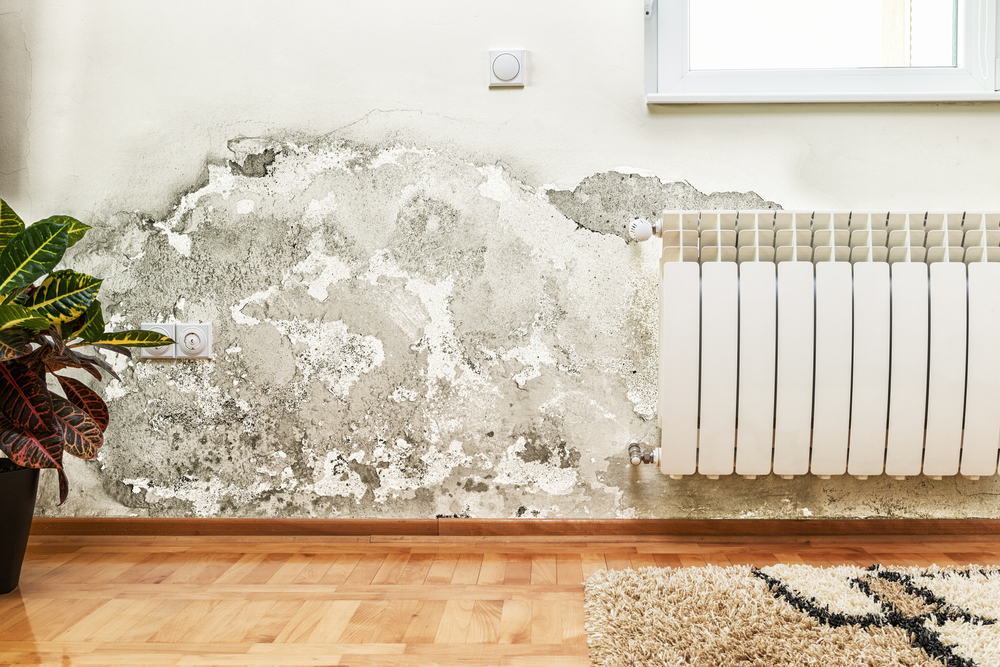
Walk into almost any basement in Northeast Ohio in July and you'll notice it: that damp, musty, slightly earthy smell that people write off as just how basements are. It isn't. That smell is microbial activity, and it's telling you the conditions in that basement are exactly what mold needs to get established.
Summer is peak season for it, and most homeowners have the cause backwards.
People assume basements are wettest during spring rains, and in terms of liquid water, that's often true. But the musty smell usually peaks in summer because of condensation. Warm, humid outdoor air finds its way into the basement, hits cool foundation walls and cold water pipes, and the moisture in that air condenses — the same way a cold glass sweats on a hot day.
So even a basement that never floods can run 65 or 70 percent relative humidity all summer long. Mold doesn't need a flood. Sustained humidity above about 60 percent is enough for it to colonize cardboard boxes, wood framing, drywall, and the back of that couch nobody has moved since 2019.
A properly sized dehumidifier set to keep humidity under 50 percent is the single most effective thing a homeowner can do. Hook it to a drain or condensate pump if you can. A cheap humidity gauge will tell you whether it's keeping up.
It feels logical to open basement windows to air things out. In summer, this makes it worse — you're importing humid air and feeding it to your cool walls. Keep the windows closed and let the dehumidifier work.
Cardboard on a concrete slab is a mold sandwich. Use plastic totes and metal shelving, and keep storage a few inches off the floor and away from exterior walls.
Clogged gutters, short downspouts, and soil sloping toward the foundation all load the walls with moisture that ends up inside. An hour of yard work takes real pressure off your basement.
Not every musty basement needs a mold test. But testing makes sense when:
If you've held the basement under 50 percent humidity for a few weeks and the odor isn't fading, something may already be growing where you can't see it — behind paneling, under carpet, inside a finished wall.
Dark spotting on joists, white fuzz on stored items, or staining on finished walls is past the prevention stage. Testing identifies what you're dealing with and how far it's spread.
Allergy symptoms that improve when you leave the house are a classic sign worth taking seriously.
For buyers, a mold test turns a mystery smell into a known quantity before you close. For sellers, clean results take a buyer objection off the table before it's raised.
Front Line provides certified mold inspections and testing across Akron, Cleveland, and Northeast Ohio, with lab-analyzed samples and fast, plain-English reporting. If your basement is telling you something this summer, we can help you figure out exactly what it's saying.
Keep reading: Your Northeast Ohio Summer Home Maintenance Checklist (From the People Who Inspect the Damage) and Buying an Older Northeast Ohio Home in 2026? Here's What the Inspection Will Find.
Serving Cleveland, Akron, Canton, Medina, Strongsville, and communities throughout Northeast Ohio, our experienced inspectors deliver clarity, honesty, and timely reports so you can confidently move forward with your real estate decisions.


